
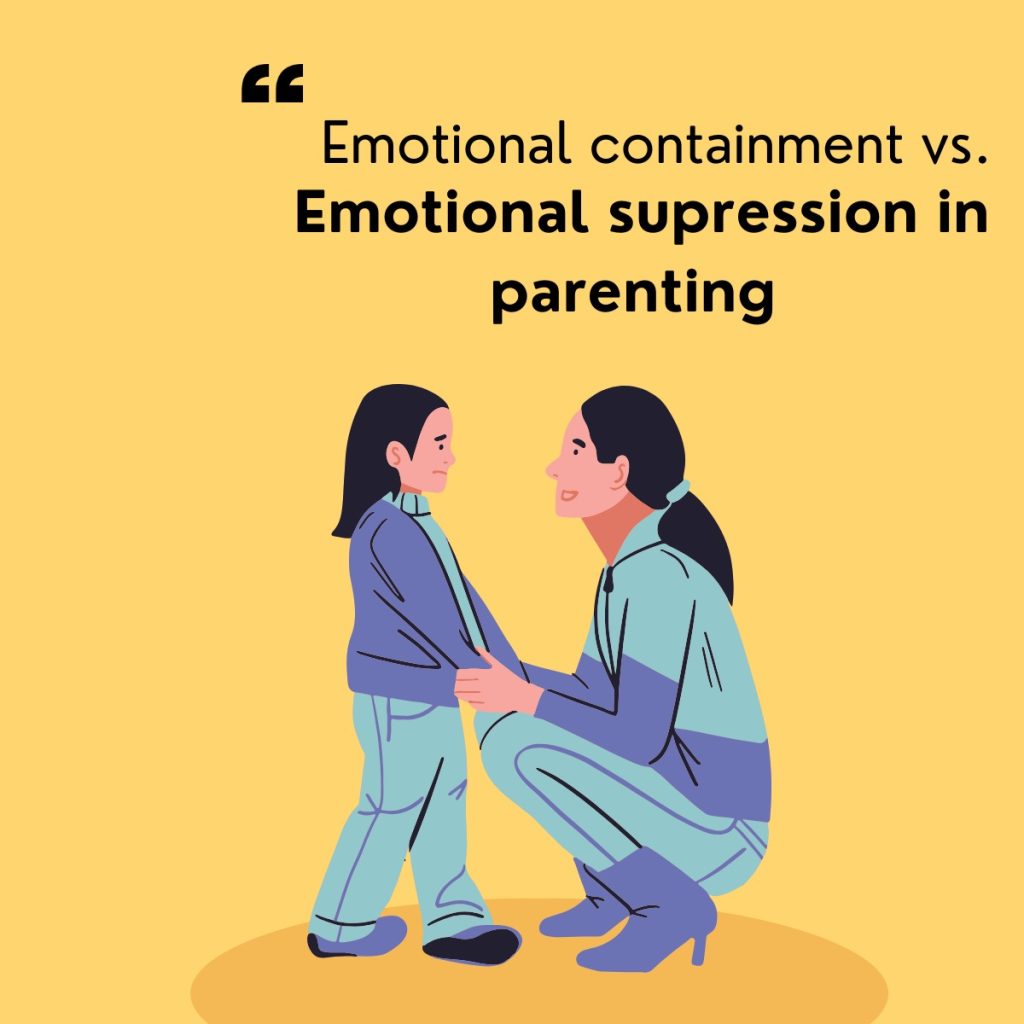
There’s a fine but important line between emotional containment and emotional suppression. Containment means managing and expressing emotions in a healthy way—being aware of what you’re feeling and choosing when and how to show it. Suppression, on the other hand, means bottling emotions up, often to the point of emotional shutdown or explosion.
Many parents, fearing they’ll upset their child, choose suppression. They push down sadness, hide frustration, and try to maintain a mask of composure. But children are emotionally intuitive. They can often sense when something feels “off,” even if they can’t articulate it.
Emotional containment, when modeled by parents, teaches children that it’s okay to feel—but also that emotions don’t have to control us. Saying “I’m feeling really sad today, but I’m going to take care of myself” is far more helpful than pretending everything is fine while feeling hollow inside.
Parenting is an emotional marathon. Learning to sit with discomfort, express feelings safely, and model emotional hygiene can significantly improve not just your mental health—but your child’s future emotional resilience. It starts with permission: to feel, to share, and to heal.
Kanishka